Why the 2026 Autistic Planner Is More Than Just a Calendar—It’s a Tool for Neurodivergent Empowerment
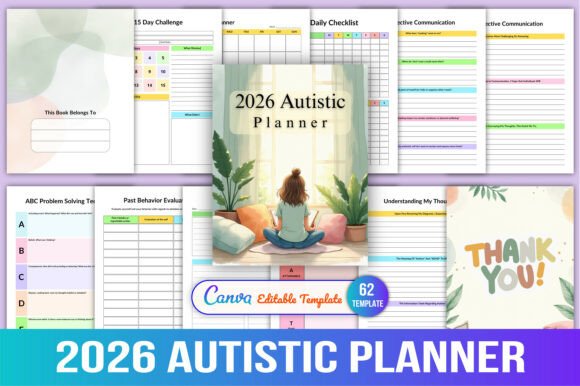
For many autistic individuals, traditional planners fall short—not because they lack structure, but because they assume a neurotypical experience of time, emotion, communication, and self-regulation. The 2026 Autistic Planner changes that. Designed with deep neurodivergent insight—not just accessibility in mind, but inclusion by design—this Canva-based KDP (Kindle Direct Publishing) planner meets autistic users where they are: in sensory reality, emotional nuance, and authentic self-expression.
What Makes This Planner Different? Purpose-Built, Not Adapted
Unlike generic productivity tools retrofitted with “autism-friendly” labels, the 2026 Autistic Planner begins from a foundational truth: autistic cognition isn’t a deficit to be managed—it’s a way of processing the world that deserves thoughtful, respectful support. Its structure doesn’t ask users to “fit in”; instead, it creates space for them to show up as they are.
This distinction matters. A planner that simply removes clutter or adds larger fonts may improve readability—but it won’t help someone decode why a meltdown happened after a seemingly routine grocery trip. That requires understanding sensory thresholds, communication fatigue, and the hidden labor of masking. The 2026 Autistic Planner includes features built precisely for those moments.
Key Features, Explained Through Real-Life Use
Let’s walk through how each major component supports daily life—not as abstract concepts, but as practical, lived tools:
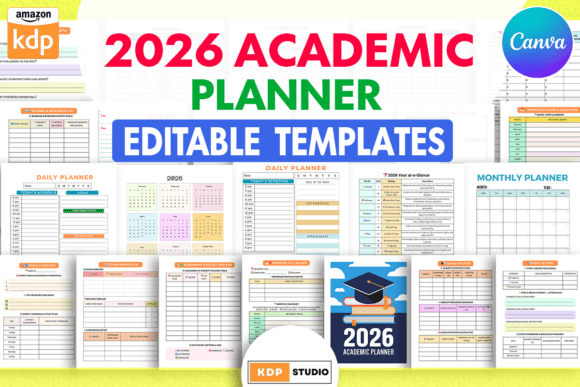
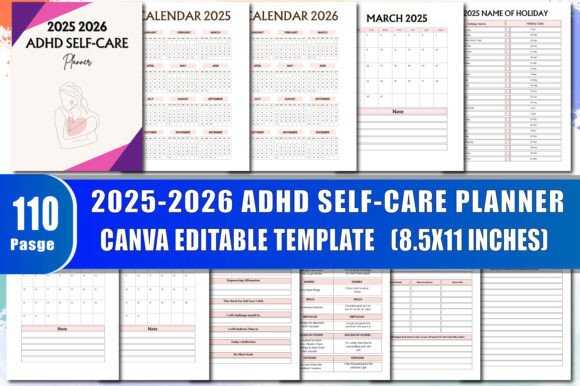
- 📅 Full-Year & Monthly Layouts: These aren’t just dated grids. Each monthly spread includes dedicated “transition notes” space—because moving from one month to the next can be emotionally disorienting for many autistic people. Users can jot down what felt stable last month, what shifted, and what support they’ll need going forward.
- 🧠 Cognitive Behavioral Tools (ABC Templates, SMART Goals, Therapy Notes): The ABC model (Antecedent–Behavior–Consequence) helps users reflect on patterns without judgment. For example: “Antecedent: Loud Zoom call with 8 people → Behavior: Shut down and muted mic → Consequence: Missed team update.” Paired with gentle prompts (“What helped me re-engage?”), it builds self-awareness—not self-criticism.
- 🗣️ Communication Reflection Pages: These invite users to explore questions like, “When did I mask today—and what did I suppress to do it?” or “What words or phrases feel truest to me right now?” It’s not about fixing communication; it’s about reclaiming voice and recognizing energy costs.
- 💥 Meltdown & Shutdown Trigger Trackers: Rather than framing meltdowns as “bad behavior,” this tracker normalizes them as physiological responses. Users log sensory input (e.g., fluorescent lighting, overlapping conversations), intensity (1–5 scale), and what helped afterward (e.g., weighted blanket, silence, stimming). Over time, patterns emerge—helping users anticipate needs, not just react.
- ✅ Daily, Weekly, Monthly Planners: These go beyond to-do lists. Each day includes a “Priority Anchor”—one non-negotiable action tied to wellbeing (e.g., “drink water before checking email”). Weekly spreads feature “Energy Forecast” bars, letting users plan based on predicted capacity—not arbitrary deadlines.
- 🍱 Meal Planning for Sensory-Friendly Eating: This section acknowledges that food isn’t just fuel—it’s texture, temperature, smell, predictability, and safety. It includes allergy trackers, “comfort meal” recipe cards (with visual icons for crunch, creaminess, warmth), and low-effort snack lists sorted by sensory profile (e.g., “low-scent, high-chew” or “cool, smooth, no strong flavor”).
- 💪 Self-Care Challenges (12-week, 30-day, 90-day): These avoid toxic positivity. Instead of “30 days of gratitude,” options include “30 Days of Boundary Practice” or “12 Weeks of Unmasking Micro-Moments.” Progress is tracked with check-ins like, “Did this feel sustainable—or draining?”
- 🧘♀️ Mental Wellness Tools: The “Feel-Good Checklist” lists evidence-informed, low-barrier actions (e.g., “step outside barefoot for 60 seconds,” “hum one note for 10 breaths”)—not prescriptive wellness mandates. The Tension Check-in uses simple body maps (head, shoulders, hands) so users can notice physical stress before it escalates.
- 👥 Friendship & Social Reflections: Rather than pushing social “success,” these pages ask, “Which interactions left me feeling replenished? Which ones required heavy masking?” They help users identify relationships rooted in mutual respect—not performance.
Who Benefits From This Planner—And Why It Fits Modern Life
While designed with autistic adults and teens in mind, the 2026 Autistic Planner resonates widely. Therapists use it with clients navigating executive dysfunction. Educators adapt its reflection templates for neurodiverse classrooms. Parents of autistic children find clarity in its language—shifting focus from “what’s wrong” to “what supports this person best.” Even neurotypical readers report gaining deeper empathy and practical strategies for emotional regulation and boundary-setting.
In a world accelerating with digital overload, constant context-switching, and rising rates of burnout, the planner’s emphasis on pacing, predictability, and permission to rest feels quietly revolutionary. It aligns with modern workplace trends toward flexible scheduling, sensory-inclusive offices, and mental health-first policies—not as accommodations, but as universal design principles.
Debunking Common Misconceptions
A few assumptions often cloud understanding of tools like this:
- “It’s only for people who are ‘very autistic.’” — Not true. Autism is a spectrum shaped by environment, support, masking history, and co-occurring conditions (like ADHD or anxiety). Someone who appears “high-functioning” may still rely heavily on internal coping strategies that drain energy. This planner honors that invisible labor.
- “Planners enforce rigidity.” — On the contrary: its flexibility is intentional. Blank spaces, optional prompts, and “skip-it” checkboxes reduce pressure. Structure serves autonomy—not control.
- “It’s too niche to be useful long-term.” — Because it’s built on evidence-based frameworks (CBT, occupational therapy, trauma-informed care), its tools remain relevant across life stages—from college transitions to career shifts to parenting.
How to Get Started—and Why Canva + KDP Matters
The 2026 Autistic Planner is available as a printable PDF via Kindle Direct Publishing (KDP), optimized for use with Canva. Why does that matter? Because Canva lets users personalize layouts—resizing text, swapping colors for sensory comfort, adding custom icons, or translating pages into preferred languages. It transforms a static tool into a living, evolving companion.
No tech expertise is needed. Beginners can print and use it immediately with pen and paper. Experienced users can duplicate pages, layer in stickers or habit trackers, or integrate it with digital note-taking apps using Canva’s export features (PDF, PNG, or shareable links).
Importantly, purchasing supports autistic creators. Many versions are designed or co-developed by autistic educators, occupational therapists, and self-advocates—ensuring authenticity over assumption.
Final Thought: Planning as an Act of Self-Trust
At its core, the 2026 Autistic Planner invites a subtle but powerful shift: from viewing planning as a test of discipline, to seeing it as an ongoing conversation with oneself. It asks not, “Did I do everything?” but “What did I learn about my rhythms, needs, and strengths this week?”
That kind of reflection builds resilience—not by eliminating challenges, but by strengthening the inner compass that guides us through them. In a society still learning how to value neurodivergent minds, this planner doesn’t just help organize time. It affirms that autistic ways of being are worthy of thoughtful, beautiful, and deeply human design.