Food Word Search Puzzle Game Interior
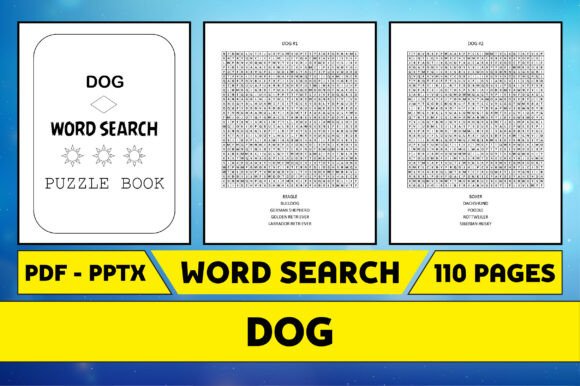
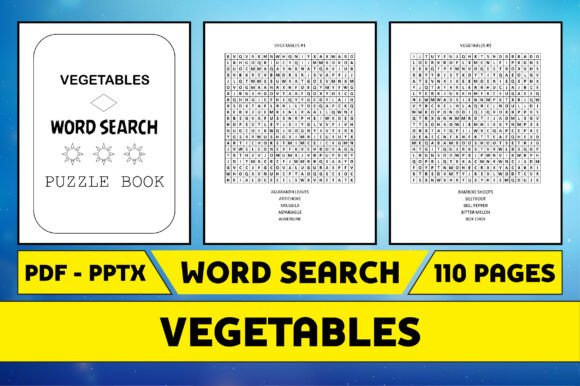
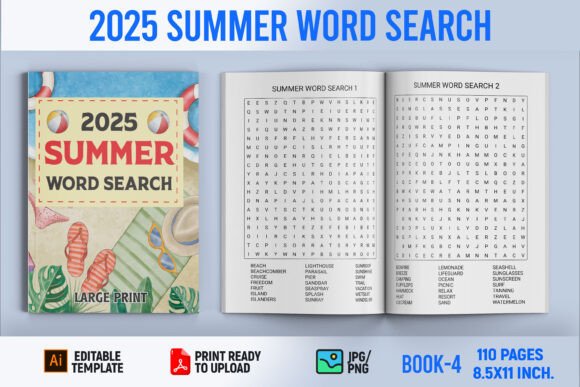
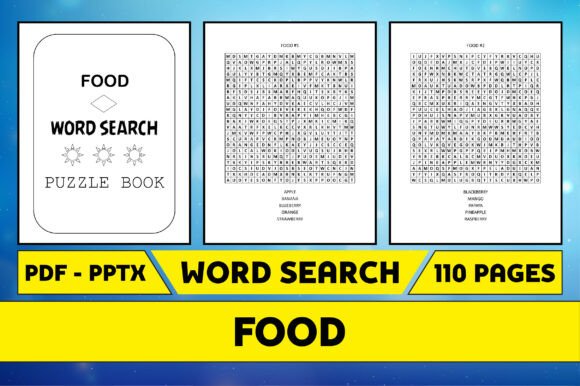
Today’s creators, educators, and small business owners need resources that are both production-ready and deeply adaptable. The Food Word Search Puzzle Game Interior meets that need precisely—not as a generic puzzle book template, but as a thoughtfully engineered publishing asset designed for real-world workflows. At its core, it’s an 110-page interior file optimized for print and digital distribution: 50 original food-themed word search puzzles, each occupying its own page, followed immediately by its corresponding solution—also on its own page. Printed in clean black-and-white on standard 8.5″ x 11″ trim size, it prioritizes clarity, accessibility, and compatibility with major platforms like Amazon KDP.
Why This Format Fits Modern Publishing Realities
Self-publishing has matured beyond “just uploading a PDF.” Today’s successful creators treat each title as part of a scalable system—testing concepts quickly, iterating based on reader feedback, and reusing assets across formats. The Food Word Search Puzzle Game Interior reflects that shift. Its one-puzzle-per-page structure isn’t just visually tidy; it reduces layout friction during KDP upload, eliminates bleed or margin guesswork, and ensures consistent pagination whether printed or converted to Kindle. Unlike dense multi-puzzle layouts that require manual adjustments for ebook conversion, this interior is built for reliability—not compromise.
Equally important is the inclusion of a fully editable PowerPoint (PPTX) file alongside the final PDF. That PPTX isn’t a placeholder or visual mockup—it’s a production-grade, layered file where every puzzle grid, clue list, and solution is text-based and individually selectable. You can change fonts, adjust spacing, insert your branding, localize terms (e.g., “courgette” instead of “zucchini”), or even repurpose grids for classroom handouts or social media teasers—all without design software or external help. For educators building supplemental materials or marketers developing lead magnets, that level of control matters more than ever.
From Niche Hobby to Strategic Content Asset
Word search books used to occupy a quiet corner of the activity book category—often generic, under-designed, and treated as afterthoughts. But food-themed puzzles have quietly gained traction across multiple audiences. Why? Because food is universally relatable, culturally rich, and inherently educational. A puzzle featuring “kimchi,” “miso,” “tahini,” and “harissa” doesn’t just pass time—it sparks curiosity about global ingredients. A grid centered on “kale,” “quinoa,” “chia,” and “avocado” aligns with wellness-focused readers seeking low-pressure engagement with nutrition topics. And for ESL teachers or speech-language pathologists, food vocabulary offers concrete, high-frequency nouns ideal for reinforcing spelling, pronunciation, and categorization skills.
This evolution reflects broader shifts: rising demand for screen-light mental breaks, growing interest in mindful learning tools, and increased appreciation for analog experiences that support focus rather than fracture attention. The Food Word Search Puzzle Game Interior doesn’t chase trends—it supports them. Its black-and-white format reduces printing costs and appeals to eco-conscious buyers. Its food-specific theme avoids oversaturation while offering clear audience targeting—unlike “general knowledge” puzzles that struggle to stand out in crowded marketplaces.
Practical Implications for Different Users
For KDP Publishers: This interior saves dozens of hours. No need to build grids from scratch, debug alignment issues across devices, or reformat solutions for different trim sizes. The 8.5″ x 11″ layout complies with KDP’s most forgiving print specifications, and the 110-page count falls comfortably within optimal paperback range—avoiding higher per-unit costs associated with thicker books. You can launch a polished, professional-looking title in under a day.
For Educators & Trainers: The editable PPTX lets you adapt puzzles to curriculum goals—swap out terms to match a unit on Mediterranean cuisine, add custom instructions (“Find 3 words related to fermentation”), or extract single grids for projected classroom use. Because all text is native PowerPoint content—not embedded images—you retain full editing flexibility without licensing restrictions or font substitution risks.
For Freelancers & Designers: Clients increasingly ask for “print-ready + editable” deliverables—not just final files. This interior serves as both a starting point and a benchmark. You can brand it, extend it (add introductions, answer keys with explanations, or bonus recipes), or bundle it with companion assets like Canva templates or email sequences. Its clean, modular construction makes customization predictable—not chaotic.
For Small Business Owners: Think beyond the bookshelf. A food word search interior can anchor a branded customer engagement strategy: include a puzzle in a subscription box, feature one monthly in a newsletter (with solution next issue), or print mini versions for café tables. The editable source file means you’re not locked into one version—you can generate seasonal variants (“Summer Grilling Words”) or partner editions (“Farmers’ Market Edition”) without redesigning from zero.
How It Reflects Changing Reader Expectations
Readers today don’t just want puzzles—they want intentionality. They notice when clues reflect diverse cuisines, when grids avoid outdated stereotypes, and when typography supports readability over ornamentation. The Food Word Search Puzzle Game Interior responds by focusing on substance: varied food categories (herbs, grains, dairy alternatives, street foods), balanced difficulty progression, and uncluttered presentation. There are no distracting graphics competing with the cognitive task—just clear letter grids, legible clue lists, and immediate access to answers. That restraint isn’t minimalism for its own sake; it’s respect for how people actually use these tools—in kitchens, waiting rooms, classrooms, or during short commutes.
It also acknowledges that “completion” means different things to different people. Some solvers want speed and challenge; others value reflection and discovery. By placing each solution directly after its puzzle—not at the back of the book—the interior supports both approaches. You can flip ahead if you’re stuck, or skip to the next challenge without hunting through indexes or page numbers.
Realistic Recommendations for Getting Started
If you’re evaluating whether this interior fits your goals, start with your workflow—not your end product. Ask: Do you need to publish fast, reliably, and repeatedly? Does your audience respond better to themed, focused content than broad collections? Do you benefit more from editable source files than static PDFs?
- Test one puzzle first: Use the PPTX to customize a single grid—change the title font, adjust grid line weight, or substitute five words. See how intuitive the editing feels before committing to full production.
- Validate your niche: Search Amazon for “food word search adult” or “culinary activity book.” Note which titles rank well—and what’s missing in their interiors (e.g., inconsistent spacing, missing solutions, or unclear themes). Your advantage lies in execution consistency, not novelty alone.
- Plan beyond the book: Consider how this interior might serve dual purposes—e.g., as a printable download for your website, a bonus for Patreon supporters, or raw material for a TikTok series showing “how to solve a food word search in 60 seconds.”
The Food Word Search Puzzle Game Interior succeeds not because it promises viral growth or overnight success—but because it removes friction. It gives creators space to focus on audience connection, branding, and distribution—rather than wrestling with alignment guides or font embedding errors. In an environment where attention is scarce and expectations are high, that kind of thoughtful infrastructure isn’t optional. It’s essential.