Why the 🌞 Summer Self-Reflection Prompt Planner Is Reshaping How Professionals Recharge—and Refocus
Summer used to mean “pause.” A break from quarterly reports, client deadlines, and back-to-back Zoom calls. But for today’s professionals—creators launching new products, entrepreneurs scaling teams, marketers optimizing campaigns, and freelancers balancing multiple income streams—the season has evolved into something more intentional: a strategic reset. Enter the 🌞 Summer Self-Reflection Prompt Planner—not just another journal, but a purpose-built tool that meets modern knowledge workers where they are: mid-year, mid-transition, and deeply invested in sustainable growth.
A Tool Designed for the Rhythm of Real Work Lives
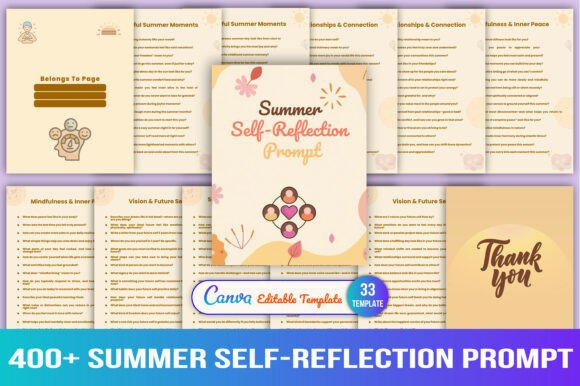
The 🌞 Summer Self-Reflection Prompt Planner stands apart because it doesn’t ask users to slow down—it invites them to sync up. With over 400 guided prompts thoughtfully organized across themes like growth, gratitude, mindset, memories, and future vision, it supports reflection that’s both grounded and expansive. Unlike generic journals that default to open-ended questions (“What are you feeling today?”), this planner offers specificity calibrated to summer’s unique energy: light, momentum, possibility, and gentle recalibration.
Consider a freelance graphic designer wrapping up a demanding Q2 project portfolio. Instead of scrolling mindlessly at sunset—or worse, burning out before vacation—she opens the planner to a prompt like: “What creative boundary did I honor this month—and how did it strengthen my work?” That question bridges introspection and professional practice. It surfaces insight she can apply directly to her next client contract or pricing strategy.
Aligning With Broader Shifts in Professional Wellness
This isn’t happening in isolation. Across industries, we’re witnessing a quiet but powerful pivot—from productivity-as-performance to productivity-as-practice. Research from the Harvard Business Review and Gallup consistently shows that professionals who engage in regular self-reflection report higher decision-making clarity, stronger emotional regulation, and improved resilience under pressure. Meanwhile, platforms like Notion, Obsidian, and Canva have normalized customizable, modular tools—making digital-first, aesthetic-aware planning not a luxury, but an expectation.
The 🌞 Summer Self-Reflection Prompt Planner responds directly to these shifts. Its editable Canva link isn’t just convenient—it reflects how creators now demand ownership over their tools’ look, tone, and function. Its inclusion of JPG and PNG files acknowledges how visual thinkers share insights across Slack, Instagram Stories, or internal team dashboards. And its seasonal focus? That’s no gimmick. It mirrors the rise of “time-bound intentionality”—a growing preference among professionals to align habits and goals with natural rhythms rather than arbitrary calendar dates.
Why Mid-Year Reflection Matters More Than Ever
January resolutions often falter by February. But summer—especially June and July—offers a rare inflection point: long daylight hours, shifting routines, and a collective cultural permission to step back. For entrepreneurs reviewing H1 metrics, marketers analyzing campaign performance, or educators preparing for fall curriculum design, this is when course corrections carry real weight.
The planner’s goal-setting pages support that pragmatism. Rather than vague affirmations, it scaffolds reflection with prompts like: “Which three Q2 outcomes surprised me—and what do those surprises reveal about my assumptions?” Or: “If I could protect one hour each week for deep thinking, what would I guard it from—and what would I invite in instead?” These aren’t feel-good exercises. They’re diagnostic tools disguised as journaling.
From Solitary Practice to Shared Strategy
What makes the 🌞 Summer Self-Reflection Prompt Planner especially relevant for teams and collaborative workflows is its built-in versatility. A marketing director might use the “vision-setting” section to draft messaging pillars for an upcoming product launch. A startup founder could adapt the “gratitude + growth” prompts into a lightweight team check-in format—asking teammates to name one thing they’re proud of and one skill they want to stretch this quarter.
We’re seeing this trend accelerate: companies like Asana and Loom now embed reflection prompts directly into project retrospectives. Internal comms teams curate “summer reset” newsletters featuring curated prompts drawn from planners like this one. Even AI-powered journaling apps are beginning to layer in seasonal context—proof that temporal awareness is becoming a baseline feature, not a novelty.
Design as Function—Not Just Decoration
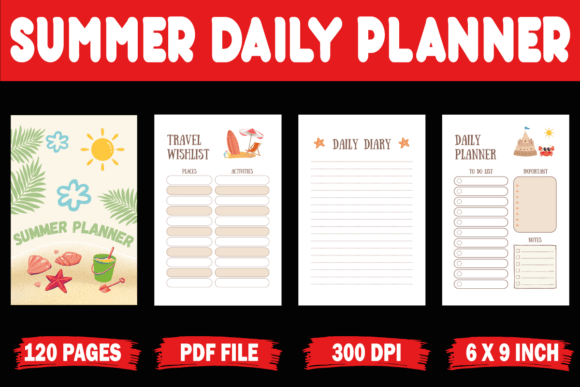
The aesthetic dimension of the 🌞 Summer Self-Reflection Prompt Planner isn’t superficial. In a world saturated with notifications and fragmented attention, visual coherence signals safety. The clean layout, warm color palette, and ample white space aren’t just pleasing—they reduce cognitive load. When a busy professional opens the PDF or clicks into the Canva template, the interface itself says: You’re allowed to breathe here.
That matters. Studies from UC Irvine show that even micro-moments of visual calm—like opening a beautifully designed document—can lower cortisol levels within seconds. For creators who spend hours editing visuals or reviewing layouts, that small psychological buffer is functional infrastructure. And because the planner includes 33 unique Canva templates—from minimalist daily trackers to vibrant weekly mood maps—it accommodates diverse working styles without forcing uniformity.
Beyond Journaling: A Catalyst for Intentional Transition
Perhaps the most compelling reason professionals are turning to the 🌞 Summer Self-Reflection Prompt Planner is its capacity to turn transition into traction. Summer often brings structural shifts: new hires, revised KPIs, platform updates, or personal milestones like moving cities or launching side projects. Without reflection, those changes become noise. With it, they become data points in a larger story of development.
Take a content creator reevaluating her monetization strategy. Using the planner’s “dreams + alignment” prompts, she might ask: “Which types of content energize me—even when engagement is low?” or “What version of ‘success’ feels lighter this season?” Those answers don’t just inform her next newsletter—they help her renegotiate brand partnerships with renewed clarity.
Or consider a solopreneur preparing to hire her first contractor. The planner’s “boundaries + capacity” section offers prompts like: “Where have I been doing work that could be delegated—and what would reclaiming that time make possible?” That kind of reflection transforms delegation from a logistical task into a leadership milestone.
Conclusion: A Seasonal Anchor in an Accelerating World
The 🌞 Summer Self-Reflection Prompt Planner succeeds because it meets professionals at the intersection of need and nuance. It recognizes that self-reflection isn’t indulgent—it’s operational. That summer isn’t downtime—it’s developmental time. And that clarity doesn’t emerge from silence alone, but from well-crafted questions that meet us where we are: sun-drenched, slightly tired, full of possibility, and ready to build something meaningful—not just for the rest of the year, but for the version of ourselves we’re becoming.
Whether you're printing it for beachside reflection, embedding it into your Notion workspace, or adapting its prompts for a team workshop, the planner serves one essential function: it turns summer’s fleeting light into lasting insight. And in a world where attention is the scarcest resource, that’s not just thoughtful design—it’s strategic advantage.