Story Seeds for Kids: Nurturing Creativity Through Playful Story Prompts
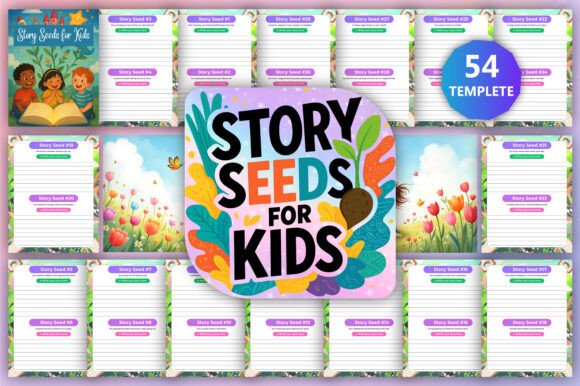
In a world where screen time often dominates children’s attention, Story Seeds for Kids offers a refreshing alternative—bringing back the joy of storytelling through imaginative prompts. This playful and creative writing journal is filled with 100 whimsical story ideas designed to spark curiosity and creativity in young minds. Each page presents a unique "what if" scenario or a silly surprise that invites kids to think, laugh, and write their own stories. Whether at home, in the classroom, or during creative writing sessions, Story Seeds for Kids provides an engaging way for children to explore their imagination.
The Power of Storytelling in Early Childhood Development
Storytelling has long been recognized as a powerful tool for cognitive and emotional development. It helps children build language skills, enhance empathy, and develop narrative thinking. Story Seeds for Kids taps into this natural inclination by offering prompts that are both fun and educational. For instance, a prompt like "What if your pet could talk?" not only encourages creative thinking but also helps children practice descriptive language and character development.
Moreover, these prompts foster a sense of ownership over the storytelling process. Instead of passively consuming stories, children become active participants, shaping narratives that reflect their interests and perspectives. This kind of engagement is crucial for developing confidence and a love for writing from an early age.
Aligning with Modern Trends in Education and Creative Learning
As educators and parents seek more interactive and hands-on learning experiences, Story Seeds for Kids aligns perfectly with current trends in education. The rise of project-based learning and creative writing workshops has made it clear that fostering creativity is essential for holistic development. This journal supports those efforts by providing structured yet flexible prompts that can be adapted to various learning environments.
Additionally, the growing emphasis on STEM (science, technology, engineering, and math) education has led to increased recognition of the importance of creativity and problem-solving. Story Seeds for Kids complements this by encouraging children to think outside the box and approach challenges from multiple angles. A prompt such as "What if you could invent a new kind of robot?" not only sparks imagination but also introduces basic concepts of design and innovation.
Design and Accessibility for Young Writers
One of the standout features of Story Seeds for Kids is its kid-friendly design. The simple layout and age-appropriate language make it accessible for children aged 6 to 12, ensuring that even the youngest writers can engage with the content comfortably. The wide open spaces on each page allow for flexibility—children can write, doodle, or illustrate their responses in any way they choose.
This level of creative freedom is vital for nurturing individual expression. By allowing children to personalize their stories, the journal encourages a deeper connection with the material. It also supports diverse learning styles, making it an inclusive resource for both traditional and visual learners.
Practical Applications Beyond the Classroom
Story Seeds for Kids is not limited to school settings. It serves as an excellent tool for homeschooling families, after-school programs, and even as a gift for birthdays or holidays. Its versatility makes it suitable for a wide range of users, including educators, parents, and creative professionals looking to inspire young writers.
For instance, a teacher might use the prompts to facilitate group discussions or creative writing exercises, while a parent could incorporate them into bedtime routines or family activities. The journal’s portability and ease of use make it ideal for integration into daily life, helping children develop storytelling skills in a natural and enjoyable way.
Supporting Creativity Through Digital Tools
In addition to the physical journal, Story Seeds for Kids comes with a variety of digital resources that enhance its utility. Users have access to an editable Canva link, allowing them to customize the design to suit their needs. High-quality PDF and JPG files ensure that the content is ready for professional printing or digital use, making it a valuable asset for both personal and commercial applications.
The inclusion of 54 different Canva templates adds another layer of flexibility. These templates provide a starting point for creating custom story journals, notebooks, or promotional materials. For businesses or educators looking to create branded versions of the journal, this feature offers a practical solution that aligns with modern workflows and digital expectations.
Why Storytelling Matters in a Tech-Driven World
While technology has transformed how we consume information, the fundamental human need for storytelling remains unchanged. In fact, the rise of digital platforms has made storytelling more accessible than ever before, with blogs, videos, and social media content thriving on narrative engagement.
Story Seeds for Kids plays a role in this evolving landscape by equipping young writers with the tools to express themselves creatively. As children grow up in a world dominated by screens, it’s more important than ever to nurture their ability to think critically, communicate effectively, and imagine beyond the confines of reality. The journal serves as a bridge between traditional storytelling and modern creative practices, preparing young minds for a future that values both innovation and imagination.
Conclusion: A Resource for Every Young Writer
Story Seeds for Kids is more than just a collection of prompts—it’s a gateway to a world of creativity and self-expression. With its engaging content, user-friendly design, and versatile digital tools, it caters to a wide range of users, from educators and parents to creative professionals. Whether used in the classroom, at home, or as a gift, this journal has the potential to inspire a lifelong love of storytelling in children.